
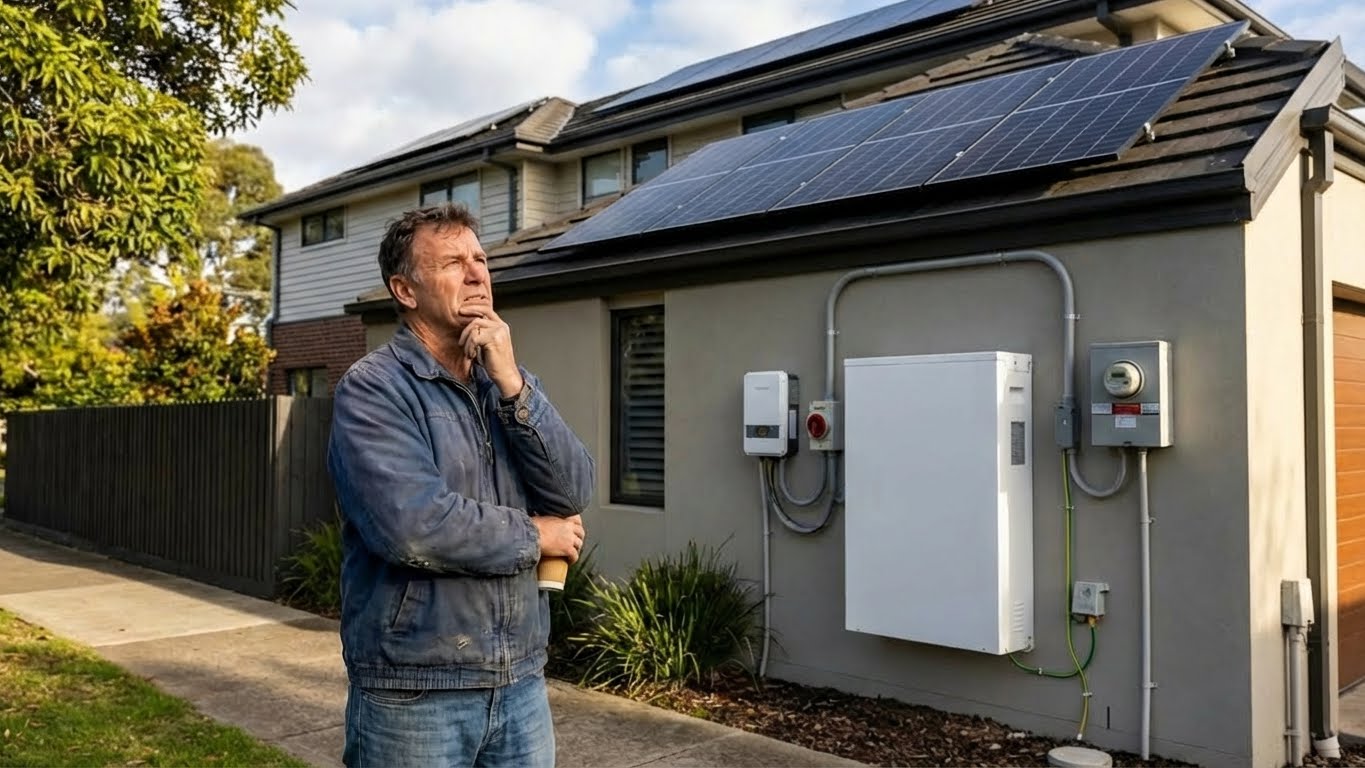
Across Melbourne — from the City of Wyndham’s outer west suburbs like Point Cook (VIC 3030) and Tarneit (VIC 3029), to the City of Hume’s northern corridor in Craigieburn (VIC 3064) and Roxburgh Park (VIC 3064), to the City of Casey’s south-eastern growth suburbs like Clyde (VIC 3978) and Cranbourne (VIC 3977) — homeowners with solar and battery systems are asking the same practical questions: “Why is my battery exporting even when it’s full?” and “Should I charge from the grid on rainy days or wait for solar?” These are the exact questions Green Electric Solutions’ team answers daily, and in this guide we’re giving you clear, data-backed answers so you can get the most from your system. With 10,000+ installations across Victoria, our SAA-certified, NET-approved team has seen every scenario — and we’ll walk you through each one.
Melbourne Solar Battery Tips: Should You Export, Charge from Grid, or Wait for Solar?
Why Is My Solar Battery Exporting Even When It’s Full?
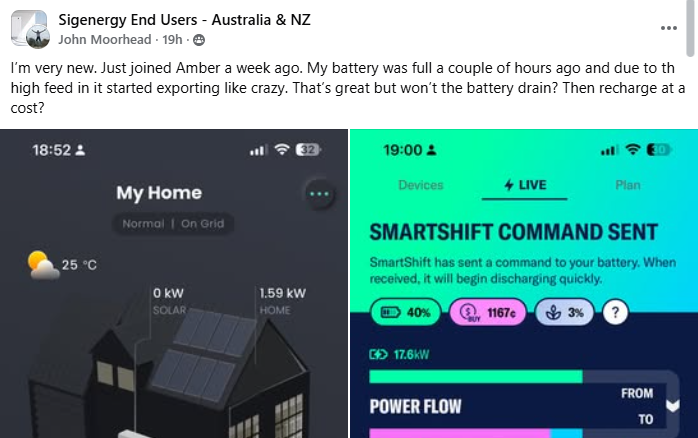
Many Melbourne homeowners notice that their battery begins exporting energy when it’s full, especially when feed-in tariffs spike. The natural question is: “Am I losing energy or paying more for this?”
Smart energy management systems, like Amber, are designed to optimise costs. When feed-in prices are high, exporting stored energy is actually beneficial — it allows you to sell electricity when it’s most valuable. The battery will never drain completely or force you to recharge from the grid at higher rates.
The system maintains a minimum reserve for your household’s use and refills primarily from solar. Grid charging occurs only if prices are low or negative, and only if you’ve allowed it. In short: your battery is selling high, storing cheap, and maximising cost efficiency.
Should I Charge My Battery from the Grid During Low-Sun or Rainy Days?
Another common question from Melbourne solar users: “My battery is at 10% early morning on a rainy day. Should I charge from the grid during shoulder hours or wait for solar?”
Option 1: Charge from the Grid During Shoulder Hours
If your battery is low and electricity costs are reasonable (for example, 18c/kWh during Melbourne’s shoulder period, 10 am–3 pm), you can top up from the grid. This ensures your battery has enough energy for the morning and any high-demand periods.
For a 48 kWh battery with ~60% overnight use, setting a time-based charge from 1–3 pm is practical. This approach gives certainty that your battery will have additional energy while keeping costs low.
Option 2: Wait for Solar Generation
Even on cloudy or rainy days, solar panels may still generate energy. Waiting for solar is the most cost-efficient option, as it fills your battery with free energy. Modern systems prioritise solar first, topping up from the grid only if necessary.
In Melbourne, this approach works well in spring and summer when intermittent sunlight still provides some energy. During prolonged rainy periods or winter, pre-charging during shoulder hours may be safer.
Practical Melbourne Solar Battery Tips: Maximise Self-Consumption and Savings
- Maintain a Minimum Reserve: Keep 10–20% of battery for overnight use.
- Use Time-Based Charging Wisely: Charge from the grid only during cheap shoulder periods.
- Prioritise Solar First: Let solar refill the battery before grid top-up.
- Monitor Weather: Adjust strategy on cloudy or rainy days.
- Understand Export Limits: High feed-in exports are normal and cost-optimised.
Real Answers to Common Melbourne Solar Battery Questions
Victorians often ask: “Why is my battery exporting when full?” and “Should I charge from the grid on rainy days?” The key takeaways:
- Battery export during high feed-in is intentional and cost-efficient.
- Charging from the grid during shoulder rates is fine if you need extra energy, but waiting for solar is always free.
- Smart management maximises self-consumption, reduces bills, and optimises your solar investment.
By understanding these strategies, Melbourne homeowners can confidently manage their solar battery systems, even during rainy days or periods of high electricity demand.
Always ensure your solar system is installed by a NET-approved company with SAA-certified installers to guarantee safety, compliance, and optimal performance. Learn more about choosing a trusted installer here.
Planning to Go Solar and Install a Battery in Melbourne?
Fill out the form below and our team of certified solar installers will guide you to maximise your energy savings.
Recent Installations & Why Choose Green Electric Solutions?
Below are our recent installations across Victoria:
- 20kW Solar System with 44kWh Battery in Hoppers Crossing
- 16kW Solar System Plus 51kWh Battery Installation in Tarneit Victoria
- 19.8kW Solar System with 48kWh Battery Storage in Longlea
- 16kW Solar System with 41kWh Battery Installation in Tarneit