

What Really Destroys Solar Systems in Australia
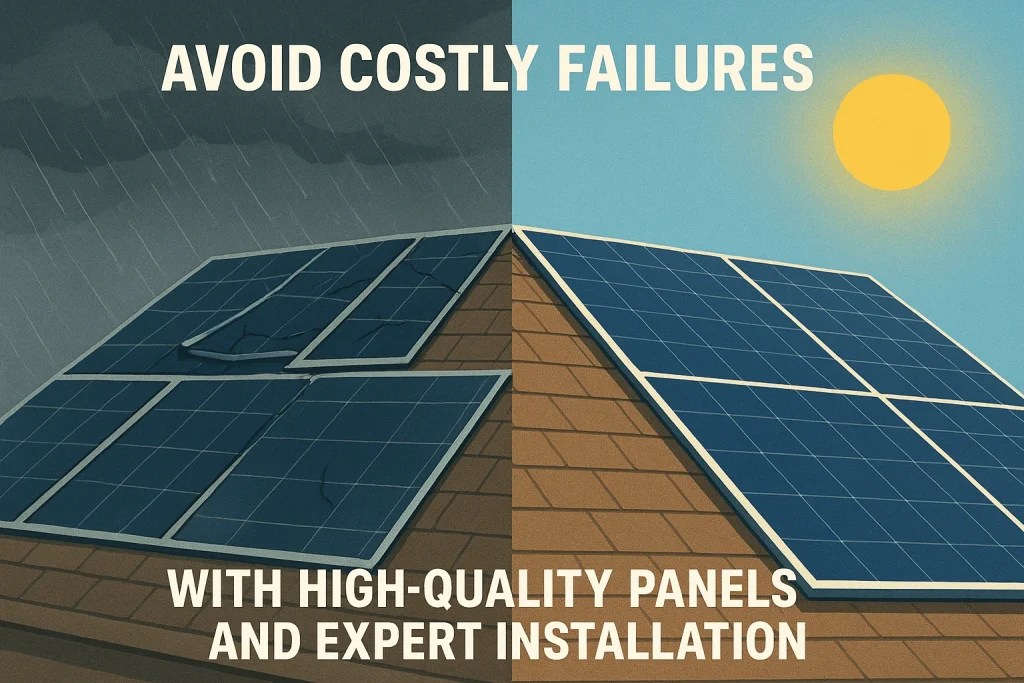
Scorching summers, sudden storms, hail, and strong winds aren’t just inconvenient—they test every panel, inverter, and battery on your roof. A poorly installed system can fail early, drain your savings, or leave you exposed. But with high-quality components, expert installation, and proper maintenance, your solar setup can keep powering your home reliably for many years or more.
Table of Contents
Solar System Warranties & Lifespan in Australia
| Component | Typical Australian Warranty | Notes |
|---|---|---|
| Solar Panels | 10–25 years | Performance warranty usually guarantees ~80% output after 25 years. Premium panels often come with full 25-year product warranties. |
| Inverters | 5–10 years | Lifespan depends on quality, usage, and environmental factors like heat or dust. Many Australians replace inverters around 7–10 years. |
| Batteries | ~10 years | Battery storage systems degrade over time; warranties roughly match their typical lifecycle under normal use. |
| Workmanship | ~5 years | Covers installation quality—mounting, wiring, roof penetrations. Some providers offer longer coverage. |
| Weather Damage | N/A | Standard warranties generally exclude hail, storms, or accidental damage. Many homeowners add extra insurance in storm-prone areas like Victoria, Queensland, or New South Wales. |
- Check both performance and product warranties before installing.
- Consider local weather risks—hail and storms can be common in parts of Australia.
- Adding a battery? Make sure warranty length matches expected lifecycle for maximum value.
- Installation quality is critical—choose an accredited installer to avoid issues with roof penetrations or wiring.
What this means for you: Don’t risk your savings on cheap panels or sloppy installation. In Victoria’s unpredictable weather, choosing high-quality panels and inverters, paired with expert installation—and optionally insurance—ensures your solar + battery system delivers reliable power and strong value for 20–25 years. Cut corners, and you could face costly repairs, reduced performance, or a system that fails far too soon.
What Usually Fails First (And Why)
Based on real-world data and common experience
Inverters: Heat, dust, heavy use, and natural wear mean inverters are often the first part of your system to need replacement. Even the best installation usually requires a service or upgrade by year 10—so choosing high-quality inverters now saves you time, hassle, and future costs.

Mounting & Installation: Poor mounting, inadequate sealing, or sloppy workmanship can cause roof leaks, structural damage, or shifting panels—especially during Victoria’s strong winds or storms. That’s why a trusted installer and solid workmanship warranty aren’t optional—they protect your home and your investment.
Panel Performance Over Time: Even top-quality solar panels slowly lose a bit of their power over the years. A 25-year performance warranty usually guarantees around 80% output, but things like heat, shade, dust, or lack of maintenance can affect performance. Choosing good panels and looking after them helps you get the most out of your system and your savings.
Batteries: Batteries naturally wear down and lose storage capacity with repeated charging. Warranties often limit usage, so heavy or stressful use can shorten their life. Going for the best quality batteries and professional installation means your system stays efficient and reliable for many years.
Why It Matters: Your solar system is a long-term investment. By choosing quality panels, dependable batteries, and expert installation now, you can enjoy maximum energy, savings, and peace of mind for decades.
Green Electric Solutions
At Green Electric Solutions, we help Victorian homeowners get the most out of their solar and battery systems. Our SAA-certified installers deliver expert workmanship, while we guide you through warranties, rebates, and the right system size for your home. With high-quality panels, inverters, and batteries, we make sure your solar setup is reliable, efficient, and built to last for decades.
Why This Matters to You—Hitting Your Pain Points
- Get the Reliability You Deserve: Choosing a certified installer with transparent quotes and a solid workmanship warranty means you won’t be left with a faulty system—or no support—down the line.
- Save More in the Long Run: Cheap, poorly installed systems may cost less upfront, but they often fail sooner, requiring costly repairs or replacements. Investing in quality now protects your wallet later.
- Protect Your Home and Investment: Proper mounting, sealing, and installation safeguard your roof and panels against Victoria’s harsh weather—wind, hail, and storms won’t catch you off guard.
- Enjoy Predictable Performance for Decades: Quality panels, backed by warranties and regular maintenance, ensure your system delivers 20–25 years of reliable energy, maximizing your return on investment.
- Avoid Warranty Surprises: Stick with accredited installers and reputable brands, and check warranty terms carefully—so you’re covered if anything goes wrong, giving you complete peace of mind.
FAQs—Clear Answers to the Most Common Questions
Is 6.6 kW enough for my home?
As a solar expert in Victoria, I often recommend a 6.6 kW system for most households—it’s the sweet spot. For a typical family of 3–5, this size usually covers most daytime electricity needs, including appliances, air-conditioning, and hot water.
If your household has higher energy demands—like EV charging, pool pumps, or large heating/cooling systems—you might benefit from a slightly larger setup in the 7–10 kW range to ensure you get consistent savings and reliable energy all year round.
Do I need a 3-phase system for a big system?
In Victoria, 3-phase power is typically only needed for large residential or commercial solar systems above 10 kW. For most homes with standard single-phase supply and systems under ~10 kW, a single-phase connection is enough. Upgrading to 3-phase can be expensive, so only consider it if your system exceeds.
Can a battery make me go off-grid?
Batteries let you store excess solar energy for use at night or during peak times, cutting your reliance on the grid. For full off-grid living, you’d need a very large solar array, a high-capacity battery bank, and possibly a backup generator. Most Victorian homes with 5–10 kW solar systems and 10–20 kWh batteries won’t go completely off-grid, but they can significantly reduce electricity bills and reliance on the grid.
Should I oversize my solar system?
Oversizing your solar system can make sense if you want to maximize feed-in tariff payments, plan to add a battery later, or expect higher electricity usage like EV charging.
However, it’s not always cost-effective—if your system regularly produces more than your home can use, excess energy sent to the grid usually earns only a small feed-in tariff.
How many panels do I need?
It depends on your desired system size, the wattage of your panels (usually 350–400 W each), and your roof’s orientation and shading.
For example, a 6.6 kW system using 370 W panels needs roughly 18 panels, while a 10 kW system requires about 27–28 panels. Always check spacing and roof fit with your installer to ensure the best performance.
Conclusion: What Really Destroys Solar Systems in Australia?
Getting the perfect solar setup comes down to matching system size, installer quality, and available incentives to your household’s real needs. Here’s what you need to know:
- System size: Most Victorian families do well with 5–6.6 kW, while larger households or EV owners may need 7–10 kW for reliable coverage.
- Installers: Always go with licensed, accredited, and reputable installers offering transparent quotes and strong warranties.
- Rebates & incentives: Don’t miss federal STCs, state rebates, and battery incentives—they can reduce upfront costs by thousands.
- Batteries: Great for storing excess solar and reducing grid reliance, though full off-grid setups are rare.
- Maintenance & longevity: Panels last 20–25 years, inverters 5–10 years, batteries around 10 years—choosing quality components and proper installation ensures long-term performance.
Take Action Now: The right system balances cost, efficiency, reliability, and incentives, giving you maximum savings, energy security, and peace of mind for decades. Don’t wait—invest smart today and enjoy worry-free, long-term energy independence.