
Which Solar Panel Gives You More Reliable Power in Victoria?
When Victorian homeowners start exploring solar panels, one question always rises to the top: which panels actually stand the test of time? While both monocrystalline and polycrystalline panels can power your home for decades, they don’t age the same way. Differences in durability, efficiency loss, and long-term output make monocrystalline panels the stronger performer for most Victorian homes — especially if you want maximum value over 20–30 years.
Table of Contents
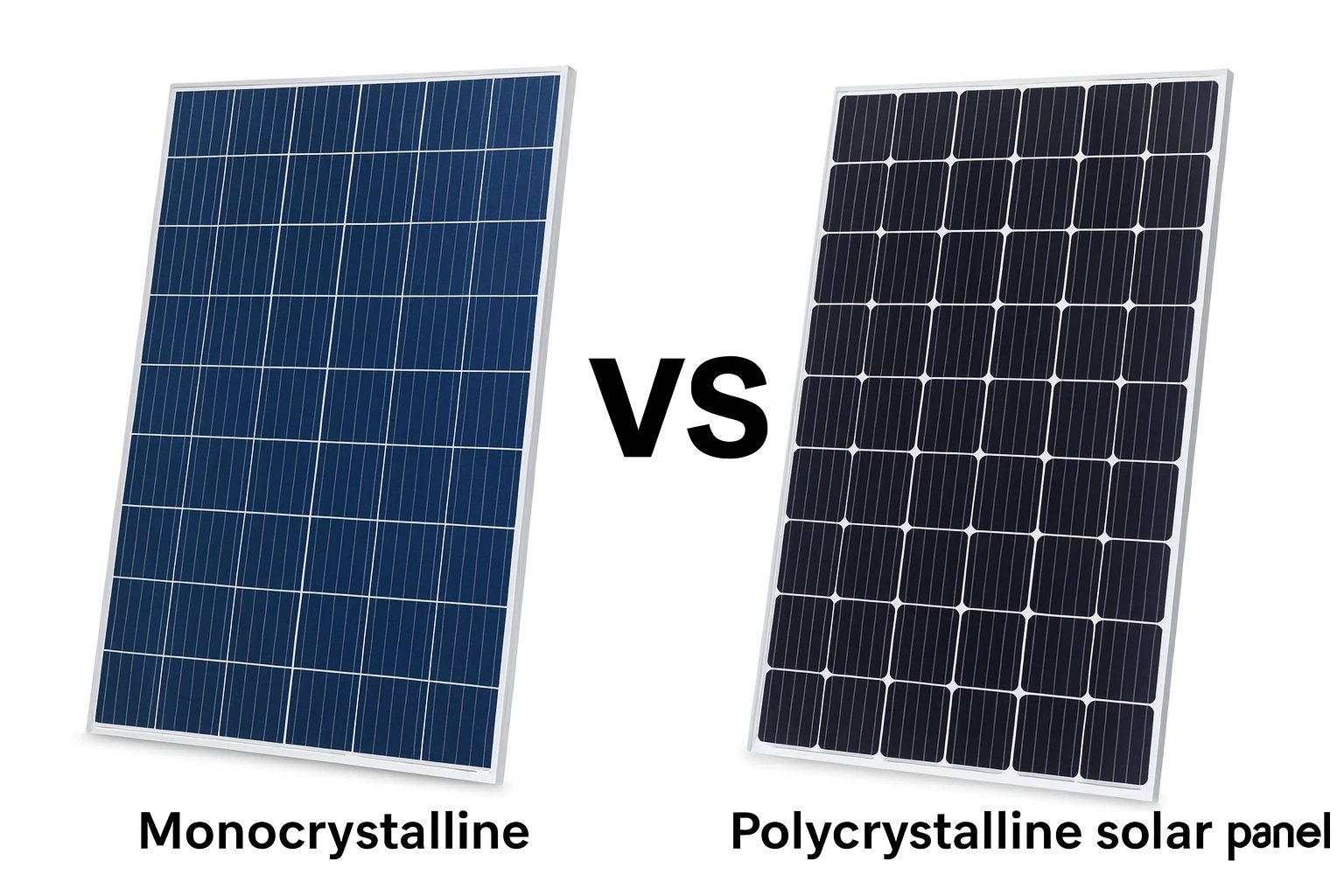
Monocrystalline vs Polycrystalline Solar Panels
| Feature / Factor | Monocrystalline Panels | Polycrystalline Panels |
|---|---|---|
| Material | Single-crystal silicon — higher silicon purity and uniform structure. | Multi-crystal silicon — made from multiple silicon crystals, slightly lower purity. |
| Typical Efficiency | ⭐ Higher (≈17%–22%) — more power per m². | ⭐ Moderate (≈15%–18%) — good performance if roof space is plentiful. |
| Degradation Rate (annual) | ≈0.3–0.6% / year — better long-term stability. | ≈0.5–0.8% / year — slightly higher steady loss. |
| Performance in Heat | Better temperature coefficient — holds output better in hot conditions. | May lose more output on very hot days. |
| Real-world Longevity | Higher total energy over 20–30 years. | Long-lasting but usually lower lifetime output. |
| Cost | Higher upfront cost but higher lifetime yield. | Lower upfront cost per watt. |
| Roof Space Requirement | Ideal for limited roof area. | Ideal when roof area is large. |
| Best Use Case | Maximum output, limited space, or battery pairing. | Budget-friendly installs with plenty of space. |
One-Stop Solution For Solar System
At Green Electric Solutions, we help you choose the right solar panels—whether monocrystalline for higher efficiency or polycrystalline for cost-effective performance—and maximize them with a smart battery setup. Adding a solar battery lets you store excess energy, cut evening grid use and boost long-term savings. If you’re planning to upgrade or want the right battery size for your home, explore our solar battery solutions to build a more reliable, future-ready system.
What This Means for Victorian Homeowners
- Monocrystalline panels age better, lose less efficiency each year, and perform more consistently in Victoria’s temperature swings.
- Polycrystalline panels are still reliable and durable but deliver slightly less long-term energy and have higher degradation in most field studies.
- Quality, warranty, and installation matter more than cell type — a high-quality polycrystalline panel can outperform a cheap mono panel.
| Situation | Best Choice |
|---|---|
| Limited roof space | Monocrystalline |
| Want maximum lifetime output | Monocrystalline |
| Tight budget & plenty of roof space | Polycrystalline |
| Planning to add a battery later | Monocrystalline (better efficiency per m²) |
| Want lowest upfront cost | Polycrystalline |
What “lasting longer” actually means
Panel lifespan isn’t just about whether a system still works in 25 years — it’s about how much power it can still deliver after decades in the weather. That’s why experts look at two things: the annual degradation rate and the product/performance warranties. NREL research shows modern crystalline silicon panels typically lose less than 1% output per year, though the exact rate depends on cell type, build quality, and environmental conditions. In simple terms: not all panels age the same, and these differences matter for long-term value in Victoria.
Final recommendation: Which Solar Panel Gives You More Reliable Power in Victoria?
For most Victorian homeowners who value long-term energy production and have limited roof space, monocrystalline panels are the better long-lasting choice. If budget and area allow, a high-quality polycrystalline system still provides reliable service for decades. Above all, focus on manufacturer quality, warranty, accredited installation, and local climate considerations — these factors often matter more than whether the cells are mono or poly.